In part 1 we ended with Grady Davis teaming up with John Wyer in late 1966, leading to the formation of JW Automotive Engineering (JWA) in England and the first official Gulf Racing team making its debut in 1967. Lets pick up the story there...
Showing posts with label Pittsburgh. Show all posts
Showing posts with label Pittsburgh. Show all posts
Sunday, December 11, 2016


Monday, September 12, 2016
The Gulf Boys Go Racing (part 1)
At the same time that Andrew Carnegie had been building Carnegie Steel, John D. Rockefeller was building the Standard Oil empire. While the automobile had not yet been invented, neither had the the electric light bulb or commercial electricity generation; petroleum products were in demand for lighting, heating and increasingly for commercial lubrication. In 1900 a number of Pittsburgh businessmen lead by William Mellon decided to get into the growing petroleum industry, and it wasn't their style to make a small investment in someone else's company; instead they got together and built a refinery near the newly discovered oil fields in Texas, followed by a number of pipelines, service stations, a fleet of oil tankers and other bits of infrastructure to support the rapidly growing automobile industry. A few years later, these investments were consolidated as the Gulf Oil company, which would soon grow to rival giant Standard Oil.
Born in 1908, in a really small town in Texas not too far from Austin and the East Texas oil fields, Irion Grady Davis (you sometimes see him use his first initial, but mostly he just went by "Grady") had studied geology at Texas University, followed by a few years of polishing at Harvard. Fresh out of school, he went to work for Gulf Oil, spending 20 years in their Venezuelan operation. He apparently knew how to work with foreign governments to get things done, and in the mid 1950s was promoted to Administrative Vice President of Gulf Oil and transferred to Gulf's headquarters in Pittsburgh. A few years later he was promoted to Executive Vice President - the number 2 spot in the company. He would play a big part negotiating with the Kuwaiti government for access to cheap middle eastern oil, which would allow Gulf to expand into Europe.
Grady Davis - early 1960s |
Image shamelessly stolen from the Corvette Hall of Fame website, lots of good stuff there.
Monday, November 18, 2013
Things that go bump in the night...
There is something a little magical about fall in Pittsburgh. While evening comes early, the days are often sunny and warm and dry - a welcome change from the heat and humidity of summer. Many trees hold on to their leaves well into October, but the less hardy varieties add a splash of color and the wonderful smell of fallen leaves to the air. Its a great time to be outside.
Getting the final bits of yard work done - raking leaves, mowing the grass one last time, putting the grill and lawn chairs away - often keeps you outside well into dusk. The shadows and thinning foliage and clear skies change the familiar horizon into something just a little spooky; along with the inevitable wave of Halloween inspired TV shows and the assortment of UFO, Bigfoot and unsolved mystery shows running continuously on the cable channels its easy to imagine glowing eyes watching you from the shrubbery or a headless horseman riding across your backyard.

So it wasn't too surprising when on an October visit to my parents in Westmoreland county (two turnpike exits east of Pittsburgh) I saw neatly printed signs planted along the roadside announcing a UFO convention at the local community college. I grew up in the area and had heard all the stories about big hairy creatures killing big mean farm dogs and how the army hauled something out of a Kecksburg field in the middle of the night, but usually I heard those stories from my Dad and his friends on all night fishing trips, when I figured their goal was to scare the crap out of us kids so we didn't go wandering around the woods in the dark. In high school I had close friends who lived in Kecksburg that I spent a lot of time with, and while we discussed all the mysteries of life that are important to 17 year old boys, the subject of aliens never came up. As a teenager I drove the dark back roads of Kecksburg many times and can tell you its easy to imagine all sorts of things lurking in the shadows that 1960s sealed beam headlights couldn't penetrate, but I never saw anything big and hairy or thin and grey-skinned step out on the pavement.
But now we have the internet. I came home from my parents and typed "kecksburg ufo" into Google and spent a guilty evening reading alleged eyewitness accounts and conspiracy theories about something that happened in my own backyard. I have grave doubts any extraterrestrials dropped into Kecksburg, but it seems likely that something happened there in December of 1965.
Here is what we're reasonably sure of. About 4:45 pm on December 9th, 1965 - a Thursday evening just before sunset - a fireball blazed across the sky over Detroit and appeared to to head south over Lake Erie. More sightings came in from Ohio, from Cleveland to Columbus, including reports of grass fires started by flaming bits of something falling to the ground. I emphasize appeared to because depending on the object's trajectory it may well have dropped straight into Lake Erie, and still been visible far to the south. Natural meteors (rocks) can enter the atmosphere at a steep angle such as this.
If the fireball was actually a piece of space junk falling out of orbit (or a reentering spacecraft), it would have entered the atmosphere at a shallow angle, essentially following the earth's surface as it shed speed and eventually fell to the ground. If this was the case, the object would have been moving at 1000s of miles per hour in the general direction of Pittsburgh, passing over Cleveland and Akron on the way.
In Kecksburg - a tiny town (really just a few farms sharing a VFD) about 40 miles east of Pittsburgh, some kids came inside to tell their Mom they had seen a "burning star" fall into the nearby woods; Mom looked and thought she saw a bright light in the woods. About 6:30pm - probably after the supper dishes were cleared - Mom called the story into local radio station WHJB (talk radio shows were the social networks of 1965). The radio station notified the state police. It was a dry, warm night with a full moon and the word was out: reporters, police, volunteer firemen and curiosity seekers descended on Kecksburg en masse.
And then it gets fuzzy. Those who got there early - including WHJB announcer John Murphy - claim to have seen a few PA state troopers walking around with flashlights and a bronze-colored, bell or acorn shaped metal object about 6 feet in diameter and 10 feet long half buried in the ground in a wooded lot. Those who arrived a little later saw armed soldiers guarding the site and warning onlookers they would be shot if they tried to go into the woods. Some witnesses reported there were men in hazmat suits with NASA logos walking around. Much later, after most of the civilians had left, the military types used a bulldozer (where did that come from?) to load the something on to a flatbed truck that drove off into the night. The official police report issued the next day was that nothing was found the night before.
Over the years more and more witnesses have come forward to tell their stories of that night. Members of the Kecksburg VFD have told about the massive military presence that rolled into town. A former Air Force officer claimed to have guarded the truck during a brief stay at Lockbourne AFB near Columbus Ohio, allegedly on its way to Wright Patterson AFB in Dayton (it seems a little odd that the truck would stop an hour short of its final destination). A contractor claims to have delivered a load of bricks to a Wright Patterson hangar where he caught a glimpse of a bell shaped object.
Today there is precious little proof of anything, including whether the Army was ever there. In 1965 cameras didn't fit in your pocket, and no photos seem to have been taken. Most of the details of the story came out in interviews done for a TV show in 1990, 25 years after the event; plenty of time for records to be lost and memories to fade and shift.
There may be no proof of a recovery because it never happened. There are lots of reserve and National Guard armories scattered around southwest PA, but they are primarily training centers for part-time soldiers; there aren't teams of men and equipment sitting there waiting to deploy on a moments notice. The nearest actual Army base that could have mounted a major deployment would have been in Letterkenny PA, 120 miles east of Kecksburg. Unless the military had advance warning (unlikely, unless whatever it was was one ours) it seems doubtful any of them could have assembled a detachment of men and equipment and got them to Kecksburg by late evening.
According to some websites there are documented reports - obtained under the Freedom of Information Act - indicating that the Air Force sent 3 men from the Oakdale PA radar station to recover whatever had fallen there. Oakdale is just south of the main Pittsburgh airport and about 50 miles west of Kecksburg; until 1969 the Air Force had an air defense radar there to guide fighter planes to Soviet bombers should the Cold War ever turn hot. You can find reports from the Oakdale site online suggesting that investigating stuff that may have fallen from the sky and answering queries from UFO buffs was a common and less than rewarding job for the unit. Oakdale was just an hour away from Kecksburg; that would have fit the time line. It seems likely that the 3 airmen from Oakdale (maybe they took a few extra men to help guard the site) were the only military there, and the stories of a large Army presence were exaggerated by time and imagination.
But did they find anything in those woods? Or did an Air Force truck roll out of Kecksburg loaded with nothing more than the search lights and shovels and winches they brought with them? And if it was a piece of space junk, why all the secrecy?
Remember that in the early 1960s both the US and USSR were launching lots of stuff into space. Mixed in with the scientific probes and commercial communication satellites were spy satellites, military communication and navigation satellites and probably a few missile component tests. But aside from manned spacecraft, the only things meant to come back from space were film canisters and warheads. Moreover, the Soviets had been hinting they had an ICBM with fractional orbit capability that could lob a nuke around the south pole into the US, undetected by the north facing early warning radars - a development that would have seriously derailed the "mutually assured destruction" doctrine that was seen as the only thing preventing WWIII. Against that backdrop, anything that reentered the atmosphere and made it to the ground in one piece would have been extremely interesting to the military and men in black suits, and unlikely to ever be declassified; you'll have to make up your own mind about what happened in Kecksburg.
Obligatory scale modeling reference: Are you a military vehicle modeler who is tired of the SciFi modelers having all the fun lighting up their models with LEDs? How about building a deuce-and-a-half with a tarp covered load that glows and pulses blue light? Put it on a base with some trees and a Kecksburg road sign. I'd love to see that diorama! Imagine the fun of convincing the judges it does not belong in the Sci-Fi category. And if someone tells you the details are wrong, ask him exactly how he knows?
Don
Friday, July 5, 2013
Pittsburgh Vintage Grand Prix
Just a quick note for old car buffs and modelers: the Pittsburgh Vintage Grand Prix is kicking off next weekend - July 12th through the 21st (the racing and cars shows in Schenley Park are the last weekend - July 20th and 21st). Check out the details here: http://www.pvgp.org/

The Ford Mustang has been chosen as Marque of the Year, and while the Schenley Park course is a little too tight for the big V8s, the Mustangs and other hairy chested cars will be racing the weekend before at the Pittsburgh International Race Complex (http://www.pittrace.com/) - just north of the Beaver Falls exit of the Turnpike (map).
In addition to the racing, Saturday in Schenley (July 20th) is the day all the local car clubs organize car shows throughout the park; if you can't find something cool to look at there you just don't like cars... Both weekends are definitely worth a road trip - and make sure to clean out the memory card in your camera as there will be lots of cool stuff you just won't see at the local car cruise.
Wednesday, December 5, 2012
For conspicuous gallantry and intrepidity...
When it comes to heros, I've always liked Halsey's famous quote:
“There are no great men. Just great challenges which ordinary men, out of necessity, are forced by circumstance to meet.” - Admiral William Halsey
If you read the citations of those receiving the Congressional Medal of Honor, you find that most were given (often posthumously) to someone just looking to keep their head down, who ended up between the proverbial rock and a hard place and chose to put the lives of their fellow soldiers ahead of their own. Read the story of Marine private Harold Agerholm and Navy corpsman Donald Ballard and you'll understand what I mean.
And then there are the men who take insane risks taking the fight to the enemy for no rational reason.
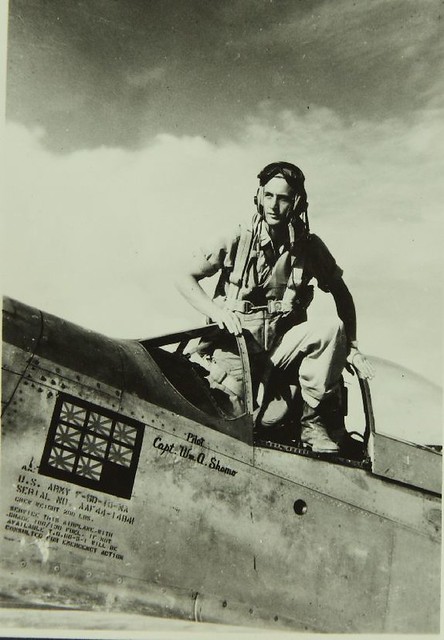
William Shomo grew up in western Pennsylvania, in the small city of Jeannette, about 30 miles east of Pittsburgh. Unless you live nearby, Jeannette is just another high school football score scrolling across the Friday night news or an exit sign on Route 30; in the 1930s it was a bustling manufacturing town, churning out home goods for the region and turning steel into industrial machines. Shomo graduated from Jeannette High School in 1936, went off to the Cincinnati Mortuary School for 3 years, came home to Jeannette with his embalmers license and went to work at the Miller Funeral Home.
In the summer of 1941 Shomo joined the Army Air Force. Since no one has ever written an in-depth biography of Shomo's life, we can only guess as to his reasons. At the time it was already obvious the U.S. would soon enter the European war, and with the draft cranking up Shomo may have figured that it was better to join on his own terms - before the massive call up that would come when the shooting started. Shomo was in the right place at the right time: the Air Force (still part of the Army) was undergoing a massive build up of men and aircraft; somehow Shomo became a pilot.
Shomo then disappears from the pages of history until late 1943 when he turns up in the Pacific, attached to the 82nd Tactical Reconnaissance Squadron in New Guinea where he is flying photo-recon and ground attack missions. The 82nd is outfitted with already obsolete P-39s and P-40s: they fly low over well defended enemy locations, make a few strafing runs to distract the anti-aircraft gunners and then circle taking photos. While Shomo is technically a fighter pilot, the only time he sees a Japanese plane is while he is on the ground and they are trying to drop bombs on him, which is probably just as well as the planes he is flying are largely outclassed.
In December of 1944 Shomo's squadron receives F-6Ds - P-51s with a big hole cut in the side of the fuselage for the camera to look out. Shomo gets an early Christmas present on December 24th, when he is put in command of the squadron and transfered to Mindoro island in the Philippines, just in time to help MacArthur keep his promise to return. On January 9th, as 175,000 men of the 6th Army come ashore at Lingayen Gulf, Shomo leads his first combat mission in the F-6; while photographing Japanese airbases on the main Philippine island of Luzon he catches a Japanese Val as it comes in for a landing and earns his first "kill" of the war.
Two days later things get a lot more exciting. Shomo and his wingman, Paul Lipscomb are on their way to photograph Japanese airbases again when they spot a gaggle of Japanese planes overhead - a "Betty" bomber escorted by 11 Ki-61 "Tonys" and 1 Ki-44 "Tojo" fighters. Shomo doesn't hesitate; he channels his inner Tom Cruise and orders an attack.
There are many conflicting accounts of what happens next; the details that follow are based largely on Shomo's Medal of Honor Citation:
The Japanese pilots have likely never seen a Mustang before - from 2000 feet above the P-51s look a lot like two more Ki-61s joining the formation, and several Japanese pilots waggle their wings in greeting. Taking fulll advantage of their confusion, Shomo closes to rock-throwing distance and shoots down three Ki-61s in quick succession as he cuts through the formation, then fires on the Betty from below, sending it toward the ground on fire, still escorted by two Ki-61s. By this time a few of the Japanese pilots have figured out what is happening and try to counter-attack; Shomo shoots down a Tony in a head-on encounter and then exchanges fire with the Tojo until it disappears into the clouds.
Meanwhile the Betty has crashed, leaving two Tonys below; Shomo dives on them and shoots them down too - making 7 kills. The two remaining Tonys decide they have had enough and bug-out. The engagement lasts all of 6 minutes; somewhere around the halfway point Shomo has become an Ace. While Shomo has been busy, Lipscomb has shot down 3 Tonys of his own.
It was the sort of story no one would have believed, except both pilots had really good cameras...
“There are no great men. Just great challenges which ordinary men, out of necessity, are forced by circumstance to meet.” - Admiral William Halsey
If you read the citations of those receiving the Congressional Medal of Honor, you find that most were given (often posthumously) to someone just looking to keep their head down, who ended up between the proverbial rock and a hard place and chose to put the lives of their fellow soldiers ahead of their own. Read the story of Marine private Harold Agerholm and Navy corpsman Donald Ballard and you'll understand what I mean.
And then there are the men who take insane risks taking the fight to the enemy for no rational reason.
William Shomo grew up in western Pennsylvania, in the small city of Jeannette, about 30 miles east of Pittsburgh. Unless you live nearby, Jeannette is just another high school football score scrolling across the Friday night news or an exit sign on Route 30; in the 1930s it was a bustling manufacturing town, churning out home goods for the region and turning steel into industrial machines. Shomo graduated from Jeannette High School in 1936, went off to the Cincinnati Mortuary School for 3 years, came home to Jeannette with his embalmers license and went to work at the Miller Funeral Home.
In the summer of 1941 Shomo joined the Army Air Force. Since no one has ever written an in-depth biography of Shomo's life, we can only guess as to his reasons. At the time it was already obvious the U.S. would soon enter the European war, and with the draft cranking up Shomo may have figured that it was better to join on his own terms - before the massive call up that would come when the shooting started. Shomo was in the right place at the right time: the Air Force (still part of the Army) was undergoing a massive build up of men and aircraft; somehow Shomo became a pilot.
Shomo then disappears from the pages of history until late 1943 when he turns up in the Pacific, attached to the 82nd Tactical Reconnaissance Squadron in New Guinea where he is flying photo-recon and ground attack missions. The 82nd is outfitted with already obsolete P-39s and P-40s: they fly low over well defended enemy locations, make a few strafing runs to distract the anti-aircraft gunners and then circle taking photos. While Shomo is technically a fighter pilot, the only time he sees a Japanese plane is while he is on the ground and they are trying to drop bombs on him, which is probably just as well as the planes he is flying are largely outclassed.
In December of 1944 Shomo's squadron receives F-6Ds - P-51s with a big hole cut in the side of the fuselage for the camera to look out. Shomo gets an early Christmas present on December 24th, when he is put in command of the squadron and transfered to Mindoro island in the Philippines, just in time to help MacArthur keep his promise to return. On January 9th, as 175,000 men of the 6th Army come ashore at Lingayen Gulf, Shomo leads his first combat mission in the F-6; while photographing Japanese airbases on the main Philippine island of Luzon he catches a Japanese Val as it comes in for a landing and earns his first "kill" of the war.
Two days later things get a lot more exciting. Shomo and his wingman, Paul Lipscomb are on their way to photograph Japanese airbases again when they spot a gaggle of Japanese planes overhead - a "Betty" bomber escorted by 11 Ki-61 "Tonys" and 1 Ki-44 "Tojo" fighters. Shomo doesn't hesitate; he channels his inner Tom Cruise and orders an attack.
There are many conflicting accounts of what happens next; the details that follow are based largely on Shomo's Medal of Honor Citation:
The Japanese pilots have likely never seen a Mustang before - from 2000 feet above the P-51s look a lot like two more Ki-61s joining the formation, and several Japanese pilots waggle their wings in greeting. Taking fulll advantage of their confusion, Shomo closes to rock-throwing distance and shoots down three Ki-61s in quick succession as he cuts through the formation, then fires on the Betty from below, sending it toward the ground on fire, still escorted by two Ki-61s. By this time a few of the Japanese pilots have figured out what is happening and try to counter-attack; Shomo shoots down a Tony in a head-on encounter and then exchanges fire with the Tojo until it disappears into the clouds.
Meanwhile the Betty has crashed, leaving two Tonys below; Shomo dives on them and shoots them down too - making 7 kills. The two remaining Tonys decide they have had enough and bug-out. The engagement lasts all of 6 minutes; somewhere around the halfway point Shomo has become an Ace. While Shomo has been busy, Lipscomb has shot down 3 Tonys of his own.
It was the sort of story no one would have believed, except both pilots had really good cameras...
Within a few months, word of Shomo's daring do made it up through the ranks. Shomo was promoted and put up for the Medal of Honor, which he received in April. He would go on to a long Air Force career, including a stint as commander of the 54th Fighter Group, based at Pittsburgh International Airport. Shomo died in 1990, and is buried in St. Clair Cemetery in Greensburg.
Modeling Shomo's F-6 and Who Was Snooks?
My research into Shomo's career was driven by a very unexpected bit of luck last summer at the IPMS Nationals raffle: on the next-to-last ticket drawn I won Tamiya's latest 1/32 Mustang super-kit. I was very tempted to sell the kit to someone who could do it justice, but the kit had been donated by Hobby Link Japan, which meant it was a Japanese market kit with no shrink wrap to break... I popped open that big box, scoped out the sprues and instructions and started to drool. On a whim I did a few internet searches for western Pennsylvania Mustang pilots and found Bill Shomo's amazing tale, and I knew there would be no rational thinking involved: I had to build the kit as Shomo's F-6.
A few more web searches turned up a few good pictures of Shomo's plane. Or rather, planes... Shomo's plane on that fateful January day was a well worn F-6D-10, serial number 44-14841. A few months later, another pilot borrowed this plane for a mission and didn't return. Meantime, Shomo was given a shiny new Mustang, dolled up with black-and-gold stripes and "The Flying Undertaker" on the nose; the perfect backdrop for picture taking when Shomo received his Medal of Honor.
But the F-6 was the plane that was there. A few more web searches turned up a set of Kageroo decals with the right markings, including the 8 kill markings shown in the picture above. The F-6 had a big bezel on the port-side holding a dinner-plate sized window for the reconnaissance camera, but that seemed within my scratch building abilities. And then I found a picture of the starboard side of Shomo's F-6 with the stylized yellow text reading "Snooks - 5th", which is not on the Kageroo decal sheet. What the heck? Back to Google...
It turns out most of Shomo's planes had "Snooks" on the nose (at least the ones he kept long enough to paint). "Snooks" was the nickname of crew chief Ralph Winkle's wife. The photo of the plane accompanying the decals was taken before or just after Shomo and Winkle took possession of the plane, but there are a number of photos of the plane with the trademark name on the nose. Even the flashy "Flying Undertaker" plane carried "Snooks - 6th" on the starboard side. By the way, a lot of internet pictures of Shomo's plane include Ralph Winkle, and some misidentify Ralph as Bill Shomo; in 1945 Ralph was stocky, well tanned, often shirtless and had a fairly bushy haircut, while Shomo was tall, skinny and surprisingly pale for someone lliving in the South Pacific.
My daughter the graphic designer turned photoshop loose on the picture and extracted the "Snooks - 5th" marking and scaled it to the right size for printing on decal paper; four years of art school tuition finally paid off! Now all I have to do is build the model. Stay tuned; I'll post pictures as the build progresses, but this article has gone from long to ridiculously long, so I'm signing off for now.
One last thing: if you haven't figured it out by now, I love Pittsburgh area history; if you have any details on William Shomo's life or career, I'd love to hear from you.
Tuesday, June 19, 2012
The Right Stuff Story You Haven't Heard
If you read Tom Wolfe's book, The Right Stuff, or watch the movie version, there is a scene right at the beginning where Chuck Yeager is given the job of flying the X1, replacing greedy civilian test pilot and playboy "Slick" Goodlin, who is holding the project hostage by demanding lots of money to attempt to break the sound barrier. Its a great scene that set Yeager on the path to fame and fortune, and it might even bring a patriotic tear of pride to your eye.
I had my first doubts about Wolfe's account when I discovered that Chalmers "Slick" Goodlin was a Pittsburgh area native, born in nearby Greensburg on January 2nd, 1923 and raised just down the road in New Alexandria, where he learned to fly as a teen (and legend has it he would sometimes deliver newspapers from the open cockpit of a plane). A real Pittsburgher wouldn't think twice about squeezing their employer for every nickel they could get, but something didn't ring true about the rest of the story: Goodlin had already agreed to make the flight - a Pittsburgher would sooner root for the Browns than back out of a deal!
 So I started digging a bit more. On the Internet there are lots of stories about Goodlin's demand for $150,000 to make the flight, but most of those seem to be re-tellings of bits and pieces of Wolfe's book. Goodlin's story is harder to piece together, but I think this is pretty close.
In late 1940 with WWII well underway in Europe and the U.S. still on the sidelines, a very young Chalmers Goodlin headed north to join the Royal Canadian Air Force in hopes of making it into combat over England. Goodlin joined the RCAF on his 18th birthday, picked up the nickname "Slick" for his flying skills and made his way to England as a pilot instructor. In late 1942, well after Pearl Harbor, the Navy somehow discovered a U.S. citizen flying for the Canadians in England, and asked him to return to the U.S. to train as a test pilot. Goodlin ended up in Florida flight testing most every plane the Navy flew - and thinking being away from the action wasn't as much fun as he had thought.
And then in December of 1943, in the middle of the biggest war ever, with less than 1 year of service, Goodlin was somehow released from the Navy to become a test pilot for Bell Aircraft. Exactly how that happened is open to speculation, but it probably had a lot to do with Larry Bell.
Bell had worked his way up through the Martin and Consolidated aircraft companies, eventually becoming a vice president. In 1935 Consolidated decided to relocate from Buffalo, New York to California, and Bell took the opportunity to start his own company in New York. Bell knew lots of rich and powerful people, including General Hap Arnold - commander of the US Army Air Force (USAAF) during WWII. Arnold had seen the Gloster Meteor flying in Britian and was convinced that jets were the future of air warfare; he gave Larry Bell the job of building the first US jet and by late 1942 it was flying out of a tiny airfield in the California desert - a place that would someday be Edwards Air Force Base. Which is a long way of saying that if Larry Bell needed a test pilot in 1943, he would have no problem springing one from the Navy.
Fast forward to 1946 and Goodlin was one of a very few test pilots at Bell Aircraft, second only to Jack Woolams. Bell had a contract to build the XS-1 - a rocket powered research plane designed to break the sound barrier - in a joint project between the civilian National Advisory Council for Aeronautics (NACA) and the US Army Air Force.
The project quickly become a den of infighting. The NACA saw it as a giant science experiment; they had the planes wired with sensors and planned to generate mountains of incremental data over dozens of flights. Bell Aircraft was expecting to earn a pile of money for performing the test flights. And the USAAF, facing massive post-war budget cuts, just wanted to take over the flying as quickly as possible.
Then while the project was just starting, Jack Woolams crashed his P-39 air racer into Lake Ontario at 400+ mph while preparing for the Cleveland Air Races. Overnight, 24 year old Chalmers Goodlin became the lead test pilot for the XS-1, making a handshake deal with Larry Bell to take over Woolams contract, which included a hefty bonus for breaking the sound barrier. Its not clear how much the bonus actually was; the often quoted $150,000 figure may have included other flying Woolams was to perform - and of course there was a chance Goodlin might not live to collect it. But still it was a lot of money for 1947.
Over the next 8 months, Goodlin would make 26 flights in the two XS-1s, including the first powered flights, eventually pushing out to mach 0.8 in the spring of 1947. And then things got really interesting. In the midst of the constant wrangling over how many test flights Bell would perform, in July of 1947 the USAAF became the US Air Force. By August, Goodlin was out and Yeager was making his first flight in the XS-1. You can draw your own conclusions, but here are mine: having Air Force personnel break the sound barrier became an obvious way to give a bit of credibility to the fledgling service, and help establish the careers of the senior officers running the project. Hap Arnold had retired in 1946, greatly reducing Larry Bell's ability to pull strings, and the hefty bonus promised to Goodlin became a handy excuse for canceling Bell's contract. Even if Goodlin had offered to fly for free he wasn't getting the flight.
So if you see an X-1 on a contest table without the "Glamorous Glennis" decal take a closer look; it might not be a mistake!
A great scene - except it never really happened!
I had my first doubts about Wolfe's account when I discovered that Chalmers "Slick" Goodlin was a Pittsburgh area native, born in nearby Greensburg on January 2nd, 1923 and raised just down the road in New Alexandria, where he learned to fly as a teen (and legend has it he would sometimes deliver newspapers from the open cockpit of a plane). A real Pittsburgher wouldn't think twice about squeezing their employer for every nickel they could get, but something didn't ring true about the rest of the story: Goodlin had already agreed to make the flight - a Pittsburgher would sooner root for the Browns than back out of a deal!
In late 1940 with WWII well underway in Europe and the U.S. still on the sidelines, a very young Chalmers Goodlin headed north to join the Royal Canadian Air Force in hopes of making it into combat over England. Goodlin joined the RCAF on his 18th birthday, picked up the nickname "Slick" for his flying skills and made his way to England as a pilot instructor. In late 1942, well after Pearl Harbor, the Navy somehow discovered a U.S. citizen flying for the Canadians in England, and asked him to return to the U.S. to train as a test pilot. Goodlin ended up in Florida flight testing most every plane the Navy flew - and thinking being away from the action wasn't as much fun as he had thought.
And then in December of 1943, in the middle of the biggest war ever, with less than 1 year of service, Goodlin was somehow released from the Navy to become a test pilot for Bell Aircraft. Exactly how that happened is open to speculation, but it probably had a lot to do with Larry Bell.
Bell had worked his way up through the Martin and Consolidated aircraft companies, eventually becoming a vice president. In 1935 Consolidated decided to relocate from Buffalo, New York to California, and Bell took the opportunity to start his own company in New York. Bell knew lots of rich and powerful people, including General Hap Arnold - commander of the US Army Air Force (USAAF) during WWII. Arnold had seen the Gloster Meteor flying in Britian and was convinced that jets were the future of air warfare; he gave Larry Bell the job of building the first US jet and by late 1942 it was flying out of a tiny airfield in the California desert - a place that would someday be Edwards Air Force Base. Which is a long way of saying that if Larry Bell needed a test pilot in 1943, he would have no problem springing one from the Navy.
Fast forward to 1946 and Goodlin was one of a very few test pilots at Bell Aircraft, second only to Jack Woolams. Bell had a contract to build the XS-1 - a rocket powered research plane designed to break the sound barrier - in a joint project between the civilian National Advisory Council for Aeronautics (NACA) and the US Army Air Force.
The project quickly become a den of infighting. The NACA saw it as a giant science experiment; they had the planes wired with sensors and planned to generate mountains of incremental data over dozens of flights. Bell Aircraft was expecting to earn a pile of money for performing the test flights. And the USAAF, facing massive post-war budget cuts, just wanted to take over the flying as quickly as possible.
Then while the project was just starting, Jack Woolams crashed his P-39 air racer into Lake Ontario at 400+ mph while preparing for the Cleveland Air Races. Overnight, 24 year old Chalmers Goodlin became the lead test pilot for the XS-1, making a handshake deal with Larry Bell to take over Woolams contract, which included a hefty bonus for breaking the sound barrier. Its not clear how much the bonus actually was; the often quoted $150,000 figure may have included other flying Woolams was to perform - and of course there was a chance Goodlin might not live to collect it. But still it was a lot of money for 1947.
Over the next 8 months, Goodlin would make 26 flights in the two XS-1s, including the first powered flights, eventually pushing out to mach 0.8 in the spring of 1947. And then things got really interesting. In the midst of the constant wrangling over how many test flights Bell would perform, in July of 1947 the USAAF became the US Air Force. By August, Goodlin was out and Yeager was making his first flight in the XS-1. You can draw your own conclusions, but here are mine: having Air Force personnel break the sound barrier became an obvious way to give a bit of credibility to the fledgling service, and help establish the careers of the senior officers running the project. Hap Arnold had retired in 1946, greatly reducing Larry Bell's ability to pull strings, and the hefty bonus promised to Goodlin became a handy excuse for canceling Bell's contract. Even if Goodlin had offered to fly for free he wasn't getting the flight.
So if you see an X-1 on a contest table without the "Glamorous Glennis" decal take a closer look; it might not be a mistake!
Subscribe to:
Posts (Atom)